Docsplainin' -- it's what I do

Docsplainin'--it's what I do.
After all, I'm a doc, aren't I?


Showing posts with label therapy. Show all posts

Sunday, June 23, 2013

On Humility, and the Limits of Formal Education, or More on Arrogance


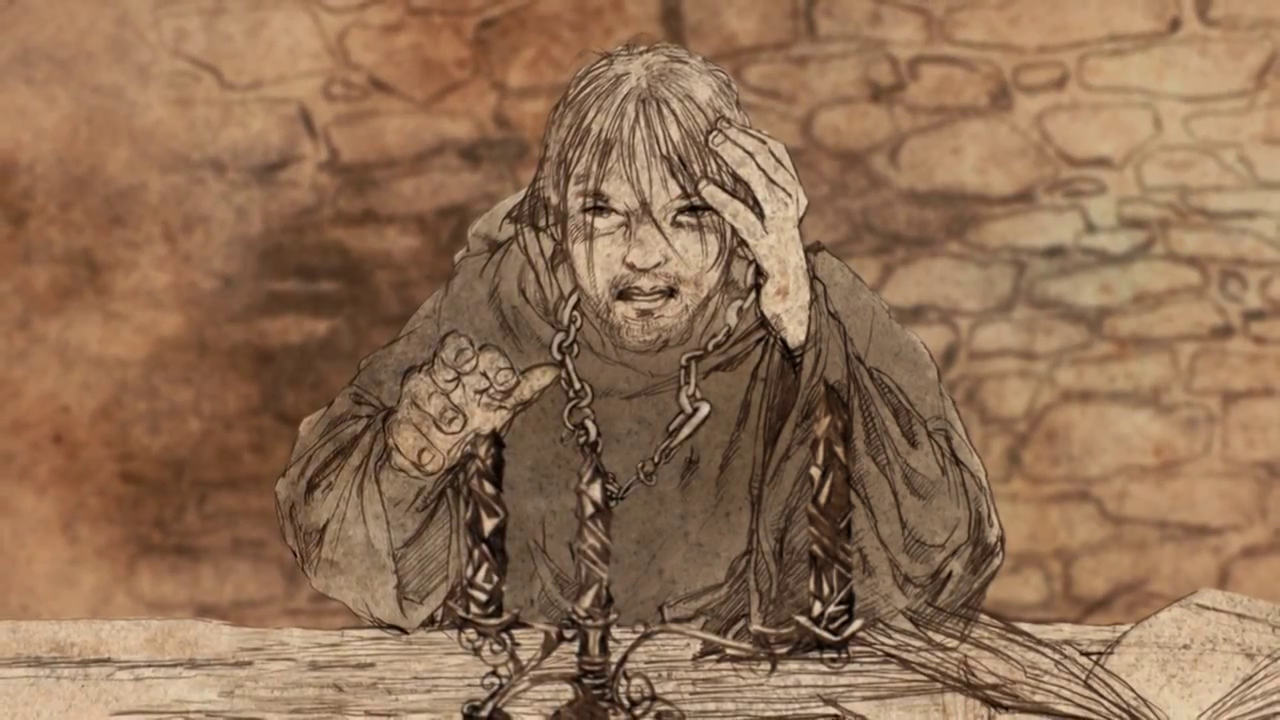
I know everybody's watched it, but have any of you read the series A Song of Ice and Fire? I'm on Book Four, A Feast for Crows. When I'm not working, I think, I live more in Westeros than I do in America. It's that intriguing, enchanting, absorbing. And the other night, I came across this passage, in the Prologue: 

"The night before an acolyte says his vows, he must stand a vigil in the vault. No lantern is permitted him, no torch, no lamp, no taper . . . only a candle of obsidian. He must spend the night in darkness, unless he can light that candle. Some will try. The foolish and the stubborn, those who have made a study of these so-called higher mysteries. Often they cut their fingers, for the ridges on the candles are said to be as sharp as razors. Then, with bloody hands, they must wait upon the dawn, brooding on their failure. Wiser men simply go to sleep, or spend their night in prayer, but every year there are always a few who must try."  

". . . what's the use of a candle that casts no light?"

"It is a lesson," Armen said, "the last lesson we must learn before we don our
maestcr's chains. The glass candle is meant to represent truth and learning,
rare and beautiful and fragile things. It is made in the shape of a candle to
remind us that a maester must cast light wherever he serves, and it is sharp to
remind us that knowledge can be dangerous. Wise men may grow arrogant in their wisdom, but a maester must alwavs remain humble. The glass candle reminds us of that as well. Even after he has said his vow and donned his chain and gone forth to serve, a maester will think back on the darkness of his vigil and remember how nothing that he did could make the candle burn. . . for even with knowledge, some things are not possible."
That stopped me in my tracks. I read it again. And then once more. And I wished that (or something like it, since we have neither dragons nor dragon glass in 21st-century America) had been our last lesson, perhaps the night before our hooding ceremony, since we don't don chains like the maesters of Westeros.

How I wish they'd taught us how to simply sit with the dark. 

I have been a therapist for 33 years, and in that time I have seen many who have grown arrogant--in their knowledge, if not their wisdom. I have seen a few use their knowledge in dangerous ways. And I have seen not a few who think that because they have the terminal degree, they must know everything. I have known psychologists trained in the scientist/practitioner tradition who abandoned all pretense at critical thinking the evening of the day they defended their dissertations. I have known psychologists who thought they had nothing else to learn and shut their minds to new ideas and new data. And I've met very few who didn't hold themselves above the less-educated. The whole profession has come to think of itself as wholly superior to masters-level practitioners, and spends a lot of time dissing them and expending energy defending turf from them that might be put to better use elsewhere. But that is another rant for another day.

Worse, and there is another rant coming on this one in a future post, psychology has come to believe that they have the power to change people. Therapy has become and "intervention" to be "delivered" as if to a  retail consumer and its success is to be measured in "behavioral outcomes".

Our clients believe this, too, and will say to us, "What do we do about it?" or, "I am ready to be fixed, now." And when we can't, they ask us, "What is the use of a candle that casts no light?" So we are seduced into trying, only to bloody our fingers once more.

As the next passage in the Prologue to A Feast for Crows makes plain, the obsidian candle can give off light -- but that's not under our control.
 "I know what I saw. The light was queer and bright, much brighter than any
beeswax or tallow- candle. It cast strange shadows and the flame never
flickered, not even when a draft blew through the open door behind me."

Armen crossed his arms. "Obsidian does not burn."

"Dragonglass.'' Pate said. "The smallfolk call it dragonglass." Somehow that seemed important.

"They do," mused Alleras, the Sphinx, "and if there are dragons in the world
again . . ."

"Dragons and darker things,'' said Leo.
The dragonglass candle is in this sense a metaphor for healing, and gives another bit to the lesson Armen describes. Illness, unhappiness, neurosis--whatever you may wish to call it--is contained within us, and so is healing. There are things we may say or do, or not say or do in a session, things that grew out of our learning (not all of which is formal, by the way) that enter into a person in the same way that a maester's antidote enters the body to combat a poison, and we may contribute to a person's healing in that way. But in the same way that the antidote and the poison do battle inside the victim's body, with the body itself as one of the combatants, so, too, is psychological healing an inside job. We have very little power compared to what resides in you.

And powers far greater than either of us may determine whether that candle burns.
Enhanced by Zemanta

Sunday, November 1, 2009

Disturbed patient, disturbing therapy by St. Cloud psychologist | StarTribune.com

Somebody on Twitter alerted me to this story. Briefly, a therapist got over-involved with two of her clients and was disciplined for it. The problem, at least as it is framed by the local newspaper, is that she has poor boundaries and poorer reality testing: As they so cutely put it, she believed the client's delusions more than the client did.

The line between a memory and a delusion is a fine one, especially in Dissociative Identity Disorder (DID). DID occurs in people who have suffered especially severe and often bizarre, but quite real, abuses while at the same time there is an unreal quality to the disorder itself. Real memories, in other words, quite commonly exist side-by-side with unrealistic beliefs in DID.


Therapists are not, and cannot be, in the business of validating clients' memories. However, when a client questions her/his own memories, we can encourage reality-testing by the client. In doing so we must not forget that perpetrators of abuse quite naturally go to great lengths to hide what they are doing, so that validating a specific memory may simply not be possible. We also need to caution clients against attempts to validate that may be dangerous, such as directly confronting perpetrators.

Sometimes the only validation available is indirect: We are working on a dysfunctional behavior in therapy, a memory surfaces, and the behavior “spontaneously” clears up. Other examples of indirect validation that come to mind include addicted and sexually-acting-out siblings (possible co-victims) and an arrest of a relative for a related crime. None of these things proves the validity of a specific memory, but it does lend credence to the client’s family portrait.

It is a myth, by the way, that a person has to remember in order to heal. Or that survivors have to remember more: To quote the late Ann D. McAllister, Ph.D., "What [they] already remember is more than enough." Digging for additional memories runs the risk of (a) producing "memories" that aren't, and (b) completely unraveling the client's ability to function in the present.

Since disbelieving real abuse can be as harmful as becoming part of a delusional system, the therapist serves the client best by focusing on current functioning. The focus of treatment becomes teaching the client to manage flashbacks, switching between alters, emotions, appropriate boundaries, insomnia, self-harm, addictions, self-image, etc. And the key phrase here is “teaching the client to manage,” not managing it for the client. Treatment for DID is emotionally intense, and it’s not going to happen without a degree of dependency developing. But throughout the therapy, the therapist maintains the boundaries of the working relationship and encourages the client’s independence.

Monday, July 20, 2009

Please Hold While I Connect Your Call

We had a spirited discussion in supervision last week about what it is exactly that we as therapists do for our patients. Job #1, as I see it, is to make connections.

Our clients are invariably suffering from some form of alienation. Perhaps they are alienated from their feelings: They don't know what they feel. Or they don't know why they feel it. Perhaps they are alienated from their selves: They don't know who they are, or what they want. They don't know why they do the things they do. They see-saw back and forth between contradictory wants, thoughts, feelings, actions, and self-images. Or they might be alienated from others: They can't maintain a relationship.

So what we do is we help them
re-connect to alienated, denied, repressed, suppressed, split-off, and projected parts of themselves.

If people are alienated from their feelings, we help them get back in touch with them.
Some people are all in their heads, some have split off their feelings and either projected them onto someone else or created alter personalities to handle them. Still others drink and drug to numb their feelings. Some just deny that they have any, and hope that will make it so. Women in my practice are frequently (if not usually) especially alienated from their anger. We might help them make the connection between their abuse of alcohol and drugs and their wish to avoid feeling angry. Or their wish to reduce inhibitions to the point that they can let loose some anger. We help them re-own anger they have split off and projected, be it onto another person or into another personality. We help them look at patterns in their lives and what their anger might mean in response to people, places, and things. Maybe we help them learn to use their anger as valuable information, as signals.

Which brings us to power. Most of my clients are no more or less powerful than the next person. But women in particular tend to believe they are powerless: They have become alienated from their own strength, usually by the same social process that alienated them from their anger. Therapy, therefore, may involve getting women to exercise that particular muscle as well.

Other people are alienated from their reason and ruled by their feelings. These folk need to be re-connected to their rational sides. We can do that, too. Therapy is a whole lot more than getting in touch with your feelings.

Some folk have become alienated from their very selves: Their parents split off experiences that would otherwise be intolerable and projected them onto the patient. Or tried to live vicariously through the patient. Instead of mirroring for the child what the child is actually like, these parents' eyes are as inaccurate as funhouse mirrors: No child looking into them all day ever day is going to grow up with a realistic self-image. Therapists, if we are doing our jobs, help clients look at themselves with their own eyes (through ours) and begin to see themselves as they actually are. They learn what they really want, not what somebody else has been telling them all their lives what they should want. We reconnect them with their own opinions.

And we reconnect them with their voices. Perhaps a child has been told all his life that what he has to say isn't important, or is incorrect, or must not be spoken of at all. This child, as an adult, is alienated from her own voice. We help her re-learn to speak her piece, often by simply listening objectively, without judging her or injecting our own points of view.

As a psychodynamic therapist, of course, I thrive on making connections between peoples' pasts and their presents. Why do they do what they do? Where did they learn that? What impulse/fantasy/wish/fear are they acting out? Where are its roots in the distant past? How does what goes on in the therapy session connect with how they conduct (or fail to conduct) themselves in their "outside" relationships?

The list of possible connections is endless. What is alienated and needs to be brought back into self-awareness varies with each client. Our job is to help them ask the right questions, observe themselves, analyze the data. We listen. We observe. We make connections.

So that's what therapists do. We are the telephone operators of the psyche.


Thursday, May 21, 2009

The basics

I am reading Jane Hall on Deepening the Treatment. It's a book for beginners (she teaches technique at an analytic institute). I didn't realize it was for beginners when I bought it, otherwise I would not have.

Liv Ullman
wrote in her memoirs that the book you need comes into your hands when you need it. I picked this one up the other day because every time I walked past my bookshelf it called out to me.

So far, and I'm a couple of chapters in, I haven't read anything I didn't already know. But I'm hanging on every word, nevertheless, partly because Hall says what she says so well, but mainly because she is reminding me why I became a therapist in the first place.

Managed care and training as a psychologist exert a powerful pull. Hall reminds us all of our roots.

Friday, September 19, 2008

How do psychologists work?

My Dad e-mailed me recently to say that
"it has always been my understanding that real world, the psychiatrist gets the patient to talk talk talk talk until he reveals his own feelings and finds himself. ...

So the question: How do shrinks in the real world get the patient to see why they work the way they do?"

That ought to be a relatively easy question to answer after nearly 30 years in the profession, so the difficulty of forming an adequate response surprised me.

Part of the problem is that "how" means more than one thing. If by "how" my Dad means "what are the actual motions we go through" then that's not so difficult. If his "how" is more at "why", as in, "what is the actual process by which change occurs?" then we are getting into the harder stuff.

One answer to the why-does-it-work? part of the question, and the part which I gave Dad, is "I'll be damned if I know. It just does." And that really is true. Why should talking to someone about your problems help? I have no idea. But I know that it does. I have experienced over the last three decades innumerable sessions in which I felt like I didn't do anything and yet the patient leaves feeling so much better. It never ceases to amaze me.

Then, when I thought about it, I got back to the old core of William James's interpersonal theory, which is, in modern lingo, that we are hardwired to live and to experience life in groups: mating pairs, family groups, tribes, and so on. In particular, the human species has the longest period of dependency on parents of any species on earth, and this period of dependency lasts long past sexual maturity--which is true of no other species on earth. So any way you look at it, we are definitely relational down to our very bones.

Looked at that way, it makes sense that what gets injured, or never developed properly, in a relational context might then heal, or grow, in a relational context. Add to that the importance of language in our cognitive and emotional lives, and it only makes sense that talk is the solution to any problem that is not strictly biological.

As to the mechanics of how it works, again, as I told Dad, there are reams and reams of writing on that subject. Not something one boils down into an e-mail or blog entry with any degree of ease. The core, however, I think is the ability of the therapist to create a safe space. I have had clients tell me that the only space that they do not feel alone in, or the only space that they do feel safe in (and sometimes both) is my office. This sense of safe, secure connectedness is the sine qua non of therapy. And everyone who comes to me for help, without exception, either has never had that secure attachment (e.g., with a parent) or has lost it in some way.

Talking it through of course involves much more than just talk. Talk, per se, accomplishes little. Sometimes the issue is that there are feelings that could not be expressed at the time (read Charlie Mike for the perfect explanation why)and so an important part of therapy is that the patient gets a chance to experience those emotions in a supportive environment. We call this a "corrective emotional experience." Especially in the case of childhood issues, a vital part of therapy is the cognitive restructuring that, ideally, follows the re-experiencing. Kids have limited ways to understand what's happening to them, and what gets tucked away in the brain in kidspeak has a tendency to remain conceptualized in child-like ways of thinking. Consequently, in adolescence and adulthood, there are vast pockets of experiencing of the self and of self-in-the-world that get thought about, felt, and acted out behaviorally in immature ways. So we have to re-understand ourselves from the vantage point of adult experience and ways of thinking. As a small example, a person may need to see that she wasn't sexually abused because she was "so sexy"* at age 5 or 6, but because her father was a sexual deviate. This will totally change her outlook on herself and on life, not just on men or sex.

So. To recap, this is how psychologists work:
  1. We establish a safe space.
  2. We encourage the patient to talk.
  3. We listen.
  4. We help reframe--if not the experience itself, then the patient's experience of it

How it works is:
  1. The patient gets to bring up issues in a safe space that they may never have had the chance to talk, think, or feel about before
  2. The therapist helps him reframe his experience, or at least his experience of his experience, in a more functional way
  3. As a result, the experience loses its power to interfere with his day-to-day lived experience

ShareThis