Docsplainin' -- it's what I do

Docsplainin'--it's what I do.
After all, I'm a doc, aren't I?


Thursday, December 7, 2017

Scientific Literacy


I teach Introductory Psychology as a general education course on a campus populated mainly by engineers--which is to say that few, if any, of my students in a given section are psychology majors. It is therefore my goal to teach, above all else, the practical uses of psychology in everyday life. I want them to learn how their minds work, how others' minds work--how to make better decisions, how to understand attempts to influence them by advertisers and politicians. 

To that end, after the Las Vegas shooting we had a big discussion on guns in America, using data from the American Psychological Association's report on gun violence. (It's available on their website, here, free for anyone to read.)

I originally made the decision not to carry my gun on campus based, in the end, on this one simple consideration (see previous post): To walk into the classroom with a gun on my person is a statement that I am willing to shoot a student under whatever circumstances I believe, in the heat of the moment, justify it. Which I most definitively am not. It also seemed weird to me to carry a gun to defend myself against my own students: What kind of a world. . . ? etc. And I've never thought arms races were a good idea.

However, as I read studies and considered the material in the text while preparing my lectures, I found support for this stance from entirely other than a philosophical point of view. To wit:

1. We make certain cognitive errors in locating the dangers in our world. For example, we are more likely to perceive a person of another race as a threat or to interpret their actions (especially if ambiguous) as a threat than we are a member of our own race--even if the latter is in fact more dangerous. This speaks directly to the point often insisted upon that the only answer to a bad guy with a gun is a good guy with a gun: We don’t have a clue who the bad guys are and aren’t, nor do we always act “good” ourselves. There are several separate but related research streams that have all come to the same conclusions: The data that Harvard University researchers have collected, for one, showing how common implicit bias is and how it drives behaviors like shooting unarmed people; a study showing that white people can't accurately gauge Black people's potential for violence, for another; and shoot/don’t shoot research.

2. The media and advocacy groups like the NRA perpetuate the myth that it is The Other who is dangerous to us when in fact (especially in the case of women) it is most likely that if you are going to be assaulted, raped, or murdered, it’s going to be by a member of your own family or someone trusted like your boyfriend. This is easy to do as the media tends not to report routine everyday domestic violence, suicide, or accidental shootings: They do, however, report Stranger Danger type crimes and due to the representativeness heuristic we, the public, believe these are, well, representative. This speaks directly to the argument advanced when Campus Carry was in the legislature that students need to be able to protect themselves at school just as they are legally able to elsewhere. No, it seems, they do not. Here or elsewhere.

3. The NRA (and gun manufacturers) perpetuate the myth that a gun is a good tool for self-protection, protection of your family, or to safeguard your property. One of the ways that they do this is by reporting individual cases where someone did use a gun in self defense: We seem to be hard-wired to use heuristics that leave us thinking these incidents are representative even though they are tiny in number compared to gun violence statistics overall. In fact, owning a gun actually increases the odds of someone in the household being shot and killed whether by suicide, accident, or domestic violence.

So I decided that, like anyone else within one and a half standard deviations of the means, (1) I don’t need my gun at all, never mind on campus; (2) It is actually a risk to me or to anyone who might be visiting my household--or classroom, God forbid--especially to children and teens; (3) If trained police officers can’t exercise judgment untainted by unconscious racism in a shoot/don’t shoot scenario, I can hardly expect that I, a civilian, would. 

Bottom line, I am less likely to use a gun against a Caucasian to save my own life, and more likely to use it against an African American or Hispanic or whatever when that person is innocent of any evil intent toward me. Statistically speaking, really, I’m more likely to accidentally shoot myself or someone else in the household or use it to kill myself than I am to use it in self defense.

And so I decided, based on science, that there is no mythical "Good guy with a gun." There are only idiots with guns. 


Friday, May 12, 2017

Could I? Should I? Would I?


"We discuss sensitive and highly charged topics in my classroom," wrote a professor who's just resigned his tenured position, "concerning anti-religious bias, racism, sexism, classism and many other indexes of oppression and discrimination. Students need to be able to express themselves respectfully and freely, and they cannot do so about heated topics if they know that fellow students are armed. . . ."

Something I'm seriously pondering as I half-heartedly look for another job this summer. Because I do teach social justice--in fact, have joined a social justice learning community at KSU in order to hone my skills--and this is a consideration for me, too.

Is it going to be safe this fall for me to challenge students to think, to question their assumptions, to analyze their prejudices? Will it be safe for me to confront cheaters? To fail people who cannot or do not do the work? Is it going to be safe for students if I encourage them to challenge each other in classroom discussions and exercises as I have done in the past? Can they still speak up about their own experiences as racial and sexual minorities? And don't tell me that it's always been a small risk: I know that. I also know that if the single best statistical predictor of death by gun is presence of a gun, then campus carry laws can only elevate the risk.

Should I spend $5-800 on a bullet-proof vest, if only to guard against accidental discharge? (That's a month's salary--or more--for one class.) I'm only half joking here: These are kids we are talking about, after all, people of an age at which rates of accidental injury and death are higher than for any other group. And this is Georgia we're talking about, where no training at all is required for permitting.

You can't take a loaded gun into a range or a gun store or show on your hip or in your purse or any way other than in its case. You have to show that it's unloaded, and at shows they even tag it to show it's been inspected and put a plastic thing through the trigger guard to prevent it firing. Why should I not take the same precautions in my classroom? Because unfortunately, under the law, I will not be allowed, that's why. And would I want to start every class by checking guns at the door, even if I could? No. It's ludicrous. I am not Wyatt Earp.

Should I carry a gun of my own? Could I, would I, shoot a student, even in self defense? (Probably not: It is a central tenet of Buddhism, according to my admittedly limited understanding, that my life is not inherently more valuable, for any reason, than that of any other sentient being. And as the effects of my late husband's NRA-induced paranoia wear off with the passage of time, I am progressively more and more inclined to just "peace out".) Would I, could I, shoot a student to protect a whole classroom full of innocent kids? Possibly. Probably, even. Do I want to place myself in such an ethical quandary? That would not seem wise. "If you don't want a slip, stay off the ice," advise AA old-timers.

And how would my kids feel about a professor with a gun on her hip? What would it be like for them to know that I, by even bringing one onto campus, have thus publicly stated my willingness to kill one of them or one of my colleagues under whatever I judge, in the heat of the moment, to be the "right" circumstances? What the hell kind of message is that sending? Especially to Black students, given what I teach about implicit biases! Would any of them, Black or white, feel free to challenge me? To question me? To argue with me? No. I can't imagine that they would: It's already enough of a challenge, given the power differential between professors and students, under normal circumstances. As it is, most of the challenges directed at me only come from white males.

No, the idea of going into the classroom or even into office hours armed is ludicrous, appalling even. And ultimately unacceptable. Carrying one in the van for personal protection on campus is only slightly less objectionable. It's like Mutually Assured Destruction. I can ramp up my defenses, thereby increasing the danger to us all, or I can start the disarmament process. It's got to start somewhere; might as well be with me.

Monday, August 25, 2014

158 Days

Things have been a little hectic in the Wood household lately, and I've gotten behind with posting -- again. 

I'm back, but only because I stumbled across something someone else wrote that is so brilliant that I couldn't not share it. 

A Facebook friend of mine has just been through a hideous, traumatic breakup. A couple of days into it, she wrote this:


158 Days with the Love of Your Life 

I found myself wondering this morning how we could ever expect the people around us to keep their promises to us when we don’t keep the ones we make to ourselves. I wondered if we let people ruin us with lies about love because we’ve never really taken the time to fall in love with ourselves.

I think maybe we do.

I was in a serious relationship for five months with a man who I believed (and my family and friends believed) was the love of my life. I was becoming friends with his ex-wife, spending time with his utterly adorable boys, and between the two of us, we were at each other’s places at least four days a week.


I have a long history of entangling myself with sociopaths; a step-father who led a double life with a second family, a live-in boyfriend who hid another girlfriend from me for a year and tried to strangle me when I finally confronted him with her in tow, another who conveniently never told me he went back to his wife…  But it’s been 12 years since I’ve been tripped up by a pathological liar. I thought maybe I had managed to learn to read the signs.

Then I got a Facebook message from the love-of-my-life’s girlfriend on Thursday night, the one he had been seeing the entire time we were in a committed relationship. I honest to God had no clue. He was swapping out her things and mine depending on who was spending the night at his place. He was texting us essentially the same “I love you baby” texts.  (I know because I’ve seen the screenshots as well as the sexting videos) He told me his mother was relentless and called him worried every night if she hadn’t heard from him. Of course, now I know he wasn’t talking to his mother. What a brilliant way to be able to tell another woman you love her while your girlfriend sits there smiling fondly at you… (Oh, and he and his ex-wife didn’t have an open marriage like he explained – at least not her side of it. So all those other girlfriends I heard about were just years of him doing what he does, what he was doing to me.)

Anyway, this isn’t about revenge. I wrote this all down for me to heal, not for me to hate. I’m just explaining what happened because it was quite possibly one of the most destructive things that could have happened to me emotionally. (To anyone perhaps, but my scars here run very very deep and they were gashed open again and now deeper.) The worst of it is the voice in my head that keeps screaming, “WHAT IS WRONG WITH YOU? Why do these people find you? Why do you let this happen? How can you be SO FUCKING BLIND. You know why everyone always betrays and abandons you? YOU ARE TOO BROKEN TO EVER BE WORTHY OF LOVE.

BUT I’M NOT. I’M NOT. FUCK YOU. I’M NOT.

And I’m not the only woman (or man) to be here in this dark place. I know we all get better. Time heals. Yadda yadda. But that’s not enough this go round. I want to meet that voice head on.  I want it to shut the fuck up.

So I’m taking back every day I gave him. Over the next 158 days, I’m going to date myself and do everything for myself that I did for him… and little bit more. And yes, because I know there’s a joke in there, I do mean sex as well. Girls, feel free to PM me with your sex toy/technique advice. And to anyone who thinks that’s crass or is pondering juvenile jokes, so be it. Love is a full package deal that includes physical touch… even if the only one doing the touching is yourself.

So I’m going to see if I can fall in love with myself. I’m going to see if I can be my own best friend.

I’m not the only one. We are all so many of us broken-hearted. So I challenge you too, my comrades of the torn and bloodied heart— for the next 158 days, let’s love ourselves. Maybe my list will help you make your own.

THE ROMANCING STARTS NOW…
  1. Make promises to yourself that you mean. Then keep them.
  2. Run. Run until there’s no more hurt. Run until you’re healthy. Run so that you can be completely there for yourself.
  3. Praise yourself for your successes.
  4. Hold yourself when things are bad. Promise yourself you will do everything in your power to make it better.
  5. Remind yourself repeatedly that you are a good person, but no one is perfect. And that you love the imperfect parts too.
  6. Be thoughtful. Put gas in the car before you almost run out. Make coffee the night before a busy morning. Do kind things that make life easier.
  7. Send cards. Leave yourself adoring and funny notes.
  8. Make yourself laugh.
  9. Take yourself out with friends so they can see what an amazing person you’re dating.
  10. Binge watch new television and commentate out loud.
  11. Cook yourself something delicious and sinful for date night every week.
  12. Read stories and poetry to yourself out loud.
  13. Sing to yourself. Loudly.
  14. When you wake say “good morning.”  Ask yourself how you’re feeling. Listen. Say, “I love you.”
  15. Say “I love you” every night before you drift off to sleep.
  16. Smile at yourself with love every time you meet your own eyes in the mirror.
  17. Take snapshots, save mementos of good times with yourself.
  18. Do things that make you feel beautiful, because beauty is an attitude and attitude is damn sexy, even when it’s your own reflection.
  19. Paint your nails, do your hair, put on makeup, wear sexy underwear (hell — corsets, garters, stockings, do it all up) and enjoy the results.
  20. When things get rocky, have a talk with yourself. Forgive yourself. Give yourself another chance to be the partner you deserve.
  21. On day 158 write yourself a long love letter. – the one you wrote him the morning before you found out about the betrayal,—the one where you will be there through the rough patches, the one that lists all the things you love about yourself including the quirks and faults. Write this letter and know that you can be certain that every word you write about you is true. That the five months of romance were real.
Then recommit. And then maybe I can let someone else into the relationship too.
Sadly, I suspect that loving myself is going to be one of the hardest things I’ve ever tried to do. But the list starts with a promise and I promise that I am going to commit myself to this relationship. I’m going to start by sending myself postcards. Here I need your help, friends…  If you are willing to help me, please drop me a line. I’ll give you something to write on a postcard and ask that you mail it to me on random day over the next five months. Or… if you are someone who has read my writing, you can pull a few lines from one of my books or posts and send them. This I’m sure, will help me stay on track.
I told her, and I meant it, that this was brilliant, that I had never, ever said anything even close to a client after a terrible breakup. And I asked her permission to repost this. 

Friday, August 1, 2014

Crass Commercialism

I'll have to apologize in advance, but I'm still gonna do it.

Hard as it is, I've made the decision to monetize the blog. I've put the ads only at the bottom, so most of you should never be bothered by them. I've blocked those annoying animated ads. I've blocked weight loss products. And anything to do with any of the various F0x "News" commercial enterprises is, of course, fox-blocked.

As other as-yet unforeseen obnoxious items pop up, I'll block them on an as-we-go basis.

But a girl's gotta make a living somehow.   

Thursday, July 31, 2014

I Don't Want To Be a Responsible Adult Any More


Digital Photography School put up an article the other day on using photography for personal growth. The woman who wrote it, Catherine Just, was struggling with being a new mom, and found herself taking a photo every day of the part of the process that was the most frustrating to her. In her case, it was not being able to get the little sprat to take his naps. She wound up with some emotionally stunning iPhone pics of herself and the bébé sleeping together. She said the photos -- and her attitude -- changed in about a month of doing this.

I had been wanting to document Mr. Wood's last year? journey? something, and struggling for a way to do it that captured our emotions but was respectful of his desire for privacy. For example, I wanted to go with him to the barber shop when he got his head shaved the other day (his hair and beard are falling out from the chemo), but he would have none of it. The notion of a daily photo of something that frustrated me really clicked, because that wouldn't necessarily be about him at all, but I still spent two or three days trying to figure out what the theme needed to be.

And finally, a light dawned. I'd been noticing a lot of nights, when it's time to go to bed and I discover I haven't cleaned up the kitchen yet and I'm already tired and my legs are already giving out, that I've been surveying the wreckage and saying to myself, "I'm tired of being a responsible adult." I want to go to bed, let my mother do it. And so it dawned on me that the most frustrating part right now is not about him or even necessarily the cancer itself at all, but about my physical inability to rise to meet the occasion, the limitations that post-polio sequelae put on my ability to care for him. Which does indeed frustrate the $#!% out of me.

And too that phrase encapsulates so much more about what's happening to us and our reactions to it. I find myself wistfully recalling times when we didn't know what we know now -- some times as recently as this spring, other times from the beginning of our relationship -- and wanting that innocence back. Not our youth or our health, even, just that sense that not only is today not threatened, but that there's always a tomorrow. I have even cracked to a high-school friend who asked if there was anything she could do, "Take me back to my childhood and leave me there." I don't want to be a responsible adult any more.

But I digress.

This morning what hit me first was the instructions on top of our dog's food storage container. I left them there for the pet sitter, in case of another medical emergency like the one we had two weeks ago, but they seemed this morning, at 6 a.m., to be a demand on me -- "Feed TWICE daily," the stickers shouted. And it's on me to do it because Mr. Wood's fatigue is so bad that he can't reliably be counted upon to be out of bed before noon, and the animals can't wait. (Sometimes he doesn't get up all day. When he got out of the hospital, he slept 28 hours straight!) So I have been, for quite some time now, getting up 20 minutes early every day to take care of the animals before I leave for work.

I took a photo of it this morning, my first for this project.

Something bugging you? Give it a try!

Wednesday, July 30, 2014

Actually now I'm remembering why I quit reading the paper in the first place

In Sunday's paper there was also a response by "Dear Abby" to a potential sexual assault victim that nearly made me blow my obstreperal lobe. The writer explained that she walks her dog in a park close to her house where a park employee is creeping her out with his staring. She would hate to have to stop walking there. Abby advises her that she's probably worried about nothing, and should ask other women if he creeps them out, too. Gee, she (Abby) sure would hate to see the poor guy lose his job if the writer were to make a complaint. Which, by the way, the writer never even mentioned. She had responded to the staring by being more deferential (smiling, saying "hi") and was looking for a more aggressive response -- how, perhaps, to confront the guy.

Seriously, woman? 

In the first place, this park is close to Dog Walker's home. Perpetrators are known to place themselves in jobs, hobbies, and volunteer positions that give them access to victims. There was a guy around here some years back who worked for a car wash, enabling him to copy the keys of women in the neighborhood, you know, for easy entry into their handily nearby homes at a later date. Where he had followed them after detailing their cars.

In the second place, living in a rape culture as we do, women are taught practically from the cradle not to make a scene. When I first started out doing rape crisis, I was amazed to learn that self-defense instructors had to make their students practice screaming. The women didn't want to do it. Couldn't do it. Our instructor told us that, among other things, women would not cross the street to avoid someone whose demeanor concerned them, would not go into a public place to avoid someone they believed was following them, would not even confront someone who touched them inappropriately -- all for fear of making a scene. Mind you, it doesn't make it a woman's fault when she gets raped: My point is that we are forbidden in this culture to act to protect ourselves, and Abby's perpetuating this with her response to Dog Walker. We are taught not to listen to our gut, not to make a stink when something's rotten in Denmark. The last thing we as women should be doing is blowing off each other's instincts that there's something just wrong about a guy.

In the third place, I purely do hate to see that the "Poor, Pitiful Rapist" syndrome (he's lonely, he's frustrated, he can't control himself, he's sick, he's crazy, blah, blah) is still alive and well. Of course this guy's not a proven rapist, but all the same, what's with all this concern about him?? This is not about him. This is about Dog Walker feeling threatened. He might be mute, Abby writes, or not speak English (although what this has to do with staring is beyond me*). Children stare because they don't know any better. But when someone or something higher up the food chain (be it a man or a leopard) stares at someone or something lower down (be it woman or mountain goat), it's a threat that's recognized across all species and so it has been for millennia. Yet just in case she might hurt his feelings or threaten his job or some such, Dog Walker's not supposed to say anything?

No, no, no, no, no -- a thousand times no, Abby. This man's right to creep women out -- for any reason, harmless or otherwise -- does not trump Dog Walker's right to feel safe in public spaces. You should have told her absolutely to quit walking her dog there, or at the very least to give this dude a very wide berth and never be out when or where there's not large crowds around. And even then. What's to stop him from following her to find out where she lives?

And further, Abby, you should have given her permission to tell anybody she damn well pleases about this guy, although I stress that she is not obligated to do so. She can tell park personnel office, security, other women, whoever she wants. It's her story: She can put up a billboard if she wants to. She doesn't have to check with other women in the park first. If it turns out that it's only that he's mentally ill or intellectually handicapped, fine. Administration can put him in a position or on a shift where so many demands aren't placed upon his limited interpersonal skills. If he's some creep who was never backgrounded before he was hired, then better they know about it and deal with it now than later.

*in fact, it strikes me now that that's even a bit ableist or racist

Tuesday, July 29, 2014

Renouncing Psychology

Deutsch: Phrenologie
Deutsch: Phrenologie (Photo credit: Wikipedia)
Well, maybe not quite yet. 

It did get your attention, though, didn't it? 

And it's true, I do have a beef with psychology. My introduction to psychology was accidental, a story many of you have heard. I wandered into a psych prof's office when I was getting signed up for a business degree, and the rest, as they say, was history. 

But these were academics. I got introduced to clinical psychology through Ann McAllister and Stuart Strenger, Ph.D.s who practiced together in Buckhead back in the '70s. They were wonderful clinicians and even better human beings, and I wanted to be like them when I grew up. 

Twenty years later, I was surrounded by so many psychologists whom I could not even like, never mind respect, that I began to wish I'd never let my counseling license go. I no longer wished to identify with the arrogance, callousness, unscientific thinking, unprofessional behavior, and outright greed that I was encountering on a daily basis. The profession, however, I still loved. I was proud of the science of psychology. 

Psychology was already changing, however, and I can't say I like the direction it has taken. So while I am not quite ready to disavow it, I do have a beef. 

Once upon a time, the scientists in psychology were all rat-runners. The psychotherapists were all theorists. And their theories generally took into account the whole human being. Psychotherapy was an emotional, intellectual, psychological -- dare I say it? -- even spiritual journey that the therapist and patient/client took together. 

And then, along came Skinner. That was the start of our slippery slope. 

Don't get me wrong: Behaviorism is a damn good theory, and behavioral therapies have some great applications. But what happened next was that, coincidentally with our long-standing desire to be taken seriously as doctors came the push to be included in insurance reimbursement, to be classed as healthcare providers. And that, my dears, was the beginning of the end as far as I'm concerned. 

 The number of mental illnesses we can diagnosis (and of course this is psychiatry's fault, not psychology's, but it stems from the same sources and we've been on board with it from the git-go) has multiplied astronomically from what it was 50 years ago. Everything's abnormal now, treatable, and most importantly from the point of view of many practitioners, reimbursable. 

The twin drives to be taken seriously and be paid as doctors has spawned the evidence-based practice movement, a child of the devil if ever there was one. Ironically, perhaps, it is also the part of the science of psychology with which I most identified in the early days. Why would we waste people's time and money, and offer false hope, for silly woo-woo therapies that don't work? Let's study what does! Sounds great, right? But somehow, in the process, we have reduced diagnosis and treatment if not to the level of the petri dish then to something scarily close to it.

Therapies are manualized. Follow this cookbook recipe with every client you have with this diagnosis, and they'll get better. It's pigeonholing clients, and reducing professionals to technicians. Everything, even assessment, is by the numbers. The person's humanity is out the window, all their experiences and dreams and complexity reduced to three symptoms from group A, two from group B, for a duration of not less than two years, and not due to some other specified disorder or circumstance listed in Appendix C.

Worse, the therapies don't work. Or they only work in the lab. One I got all excited about last year after a workshop turned out to be this sort of dud. Thirty percent of the potential participants in the big study its proponents were trumpeting were weeded out before the study ever started. They had more than one problem, or they were on medication, or whatever variation in their circumstances that normal human beings coming into clinician's offices every day exhibit. So at best, I'm thinking as I'm reading this, the new treatment works with 70% of people with this diagnosis, right?

Not so fast, Virginia. No fewer than 50% of the folk enrolled in the study dropped out! So now, if the new treatment helped every single one of the completers (which, of course, it didn't), we're talking about a therapy that is effective for 35% of the folk for whom a clinician might consider it. Thirty-five percent.

And yet this has now become the only approved therapy for this disorder.

I kid thee not. It works for maybe 35% of the population with this disorder, but if I don't deploy it with every one of them who walks through my front door, I will not be treating my people according to the standard of care, once this gets written into the standards, which it will. Mark my words.


Ironically, chasing the money has led us to fly directly in the face of the best and latest science, offering "treatments" that are absolutely proven not to work for "disorders" that are pretty much proven by now not to exist because they are lucrative. Jumping on the weight-loss bandwagon, as psychology has over the past year or two, is perhaps the best example.

I'm done.

I want to go back to sitting with my clients. And no, they're not patients. They're not sick! I want to go back to being with my clients, not sitting there trying to look attentive while running algorithms in my head or jumping ahead to what I'm supposed to say next according to the treatment protocol. I want to go back to the day when the therapeutic relationship was the primary healing factor, when my own best tool was my self, not a checklist with lines and boxes and graphs to complete to tell me what's the matter with the person. I want to go back to the day when my care was caring, not steps I followed in a manual, to a time when good therapeutic technique mattered, yes, but when there was an art to it.

Is that too much to ask?

Enhanced by Zemanta

Sunday, July 27, 2014

Oh, no. That is SO wrong!


I'm reading the Sunday paper this morning and I'm all like, wha-a-at??

It seems that transcripts of some of Carson McCullers' sessions with her therapist are being released to researchers, and everybody's all excited about how this will give them more insight into her life and art. Well, not everybody. I'm certainly not.

I'll give the therapist a pass on terminating the therapy relationship so they could have a personal relationship. This was the '50s, after all, and things were different then. In fact, they were so different that she might actually have been a bit ahead of her time in that regard. Most people back then didn't bother terminating one relationship before beginning another. I remember when I was just a young sprat of a therapist reading about one famous, leading psychologist who was therapist to a young woman, then her professor (presumably he mentored her into grad school), then her clinical supervisor -- and then her husband! Not sure when, exactly, they became lovers, but good grief. That's like a perfect trifecta of "dual" relationships.

But McCullers' therapist/partner lived until 2013. By which time it should have been glaringly obvious to her that those transcripts should have been destroyed -- back in the 60s, not to put too fine a point on it.

And the university that inherited and is releasing them bears some responsibility here, too, even though the actual custodians are likely academics in literature, not psychiatrists. They should have quietly destroyed them as soon as they realized what they had.  

Thursday, July 24, 2014

Opinionated Much?

Just when I get worried that I've been too opinionated, an angel gives me a quote like this:
"Nothing is more conducive to peace of mind than not having any opinions at all." --Georg Christoph Lichtenberg
I have no idea who Georg is (will Google him later) but I do thank him. 

Wednesday, July 23, 2014

Draw, Podna!

Or not.

Some of you may know we have a new gun law here in Georgia. Basically, it says you can carry a gun anywhere, with or without a permit, concealed or 'open carry'. And of course, as you have read in the news, some folk have been exercising that right -- resulting in at least one arrest, but I digress.

The topic came up among colleagues recently, who are all bestirred about exactly what the law says about our ability to prohibit guns in our offices, and several have expressed the felt need for legal consultation before doing anything. There was also some discussion about what to do if a client doesn't like it.

Here's my take on it.

I have always expressly forbidden weapons of any kind, legal or otherwise, permitted or not. No pepper spray, no nunchucks, no knives, no throwing stars, no guns, no clubs. This is a clearly stated, up-front policy: New clients sign a form stating that they have read and understood this. So new clients who do not wish to abide by this policy can go find another therapist. Easy peasy. But I've never had a problem with it. Everybody's reaction, from day one some thirty-three years ago, has always been, "Ok, cool, no problem." Even my gang-banger, whose posse used to stand guard downstairs during his sessions.

I don't anticipate that any of my existing clients will have a problem with it either, if only because (a) they've already agreed to my policy, and (b) because there's no political struggle for them to win here, no point for them to make. After all, I'm a good ol' girl myself, with a gun and a carry permit of my own, and I don't bring my gun to the office! Also, it's not a policy in isolation of other operating procedures I have in place -- all of which I follow as well. I expect 24 hours' notice of cancellations, for example, and in return I let you know the minute I know I'm not going to be able to be there for your appointment. If you no-show, I charge you; if I double-book, the next one is on the house. You can't show up drunk and expect to get a session, but then again, I don't show up drunk to work with you, either.  

There was also a flurry of worry about how to terminate appropriately with a client who violated the policy. Again, I am not concerned about that, because if a client brings a gun into my office or repeatedly shows up drunk, doesn't pay their bill, whatever -- they have already clearly stated by their behaviors that they do not respect me or the terms of our contract. They are in breach of contract and I'm no longer obligated, not to find them another therapist, and not to see them three more times to wind up their treatment. And that is not abandonment, because they knew in advance of the fact that such behavior would terminate our work together. Therefore, by doing so, they are in effect leaving the therapy, same as if they'd walked in the door and said, "I quit." I'm not going to schedule my usual three termination sessions in such a case, knowing they're going to bring in a gun and endanger me, my coworkers, and our other clients in that manner. Now that would be unethical.

I would, because it is a therapeutic issue, a profound statement about how they feel about me/their mother and about their therapy, attempt to analyze it at the time that it occurs. But if we couldn't resolve the issue, then we would be at an impasse which would make any future therapeutic progress impossible anyway. 

Again, this is not about the gun, but about the process. If a client could not come to treatment sober, I would not refer them to another therapist because it would undermine the basic message I wish to send, which is that you can't do outpatient therapy while you are using. You need inpatient first, then come to therapy. Nor would I schedule three termination sessions in such a case, without some assurance that the person would be able to show up clean and sober for same. To do so would send the message that I don't really mean what I say -- that it's ok to show up drunk when I say it's ok. Same points could be made in the case of nonpayment.

So I will continue to forbid weapons -- all weapons, but especially guns because of the irrevocable lethality. The only exception is on-duty cops, who are required by the Job to carry, as has always been the case in my practice. By my reading of the law, it is legal for me to do so as a private person on private property which I have control of by means of my lease of the space. You think I can't? You can take it up with my attorney.

But it's my rule, and it stands. 
 

Sunday, July 20, 2014

Girls Find Science Boring Says Scottish Expert

Say what?

Gijsbert Stoet, a psychologist at the University of Glasgow, told his audience at the British Education Studies Association conference recently that 'effort is wasted trying to bridge gender divides in education when innate differences meant that boys and girls would always be drawn to different subjects and careers', according to an article on the tes connect website. “Do we really care that only 5 per cent of the programmers are women? Well, actually, I don’t care who programs my computers," he is quoted as saying.

Stoet works for the University of Glasgow’s Robert Owen Centre for Educational Change. Anyone else besides me find that ironic?

What about the menz, he wants to know: Apparently to him this is a zero-sum game -- any help given to girls to get them into STEM takes away from help supposedly needed by boys. And of course, if you have a choice between helping boys and helping girls, well. Helping boys is obviously more important, right?

For any of you ladies who think you are living in a post-feminist world, here's evidence that a stone-age mentality is still alive and well among people who have the power to influence your future.

Saturday, July 19, 2014

What a Wonderful World!

U.S. President Theodore Roosevelt (left) and n...
U.S. President Theodore Roosevelt (left) and nature preservationist John Muir, founder of the Sierra Club, on Glacier Point in Yosemite National Park. In the background: Upper and lower Yosemite Falls. (Photo credit: Wikipedia)
It's kind of a depressing world we live in. Every day the news is full of bad news--oil spills, murdered children, plane crashes, political chicanery, terrorism, disappearing species. Or we have direct exposure: You see a stray dog hit and killed in the road, or you are haunted by childhood memories of domestic violence or alcoholism. Someone you know is killed in Afghanistan. Or maybe the thrushes that have nested in your woods every summer since you bought the place back when your kids were little didn't come back this spring. And it is easy to despair. 

"I'm just one person! What can I do?"
This is the question a client asked me the other day. And my answer was, "A lot! You can do a lot!"

Theodore Roosevelt said it best: "Do what you can, with what you have, where you are." People with great resources (money, some sort of public platform from which to reach millions) can do a lot. The rest of us, not so much. But we can always do something, and in relative terms, it counts for much. 

The point as I see it is to be a good steward of your little corner of the world, to leave it just a little bit better than you found it.

Vote. Write a letter to your congressional representative, or your senator. Attend a school-board or city-council meeting. Write a letter to the editor. Demonstrate. Boycott. Raise money for a good cause.

Spay your cat and keep her up. It seems like a small thing, but it does wonders for her health and happiness: Cats allowed to run free are subject to all kinds of bad outcomes, ranging from injuries in fights to infectious diseases to being hit and killed by cars. In her lifetime, you could save as many as 300 birds' lives. That is no small thing! And by not allowing her to reproduce, think how many homeless kitties you've prevented in succeeding generations. 

If you can't afford a dog yourself, volunteer at your local shelter. Your efforts will make the animals' lives healthier and happier while they're there, and every hour you donate increases their odds of survival. Adopt (don't buy) one yourself, if you can. You may not be single-handedly solving the homeless dog population problem yourself, but your action means everything to that one dog. Everything.

Adopt a child. If you can't afford that, get qualified as a foster parent by your local Department of Family and Children Services. Or become a CASA (Court-Appointed Special Advocate) volunteer. Informally, offer a hand to that overwhelmed parent in the supermarket or in your neighborhood. Or pick up the phone and report a child at risk. You could be saving a life.

I used to carry a hot pink key-chain fob that said, "Woman On a Mission." Quite naturally, people would periodically ask me what the mission was. When I was a child protective services caseworker, I told everybody I was out to change the world, one child at a time. When my practice was predominantly women survivors of domestic abuse, it was "changing the world, one woman at a time." I knew I couldn't change the world, but I believed that my work could be world-changing for the one woman or child in my office, at least for the one hour. You're no different: You, too, can change the world for another living being.

Start a blog. They're free here at Blogger.com and via WordPress. Both will walk you through the set-up process, so you don't even have to be very computer-savvy. Perhaps you know more than you give yourself credit for, and you can share your experience, strength and hope with others. All it will take is a little of your time.

Recycle. Pull your weeds the old-fashioned way instead of poisoning them. Don't use pesticides. You'll help save birds, butterflies, and bees, and our soil and streams will be just that tiny bit much cleaner for your effort. If you have property, plant some milkweed.

Speaking of water, use less. If you can afford it, buy shade-grown organic coffee. If you can't, cut your consumption. Don't eat chocolate produced by companies that exploit children, use slave labor, or rape the environment. If you can't afford Rain Forest Alliance-certified chocolate, give it up. Or eat less. Buy locally-produced food-stuffs when you can.

Say something nice to somebody today. Do somebody a favor. Or just smile at them. It may not seem like a big thing to you, but it could be the highlight of their day.

My first ethics text, If Everybody Did, by Jo Ann Stover, asks children to consider their actions in the light of this question: What if everybody did that? When you are taking one tiny step toward improving your world even one tiny little bit, ask yourself that. What if everybody did? 

What a wonderful world it would be!
Enhanced by Zemanta

Thursday, July 17, 2014

The Circle of Life, or

Red-Shouldered hawk portrait
Red-Shouldered hawk portrait (Photo credit: San Diego Shooter)

Hawks Gotta Eat, Too.

 I was out on the deck one day last Spring, brushing the dog and catching some rays, and watching the nuthatches take possession of the owl box from a squirrel. It was a quiet day, so when I heard the doves suddenly fly up in alarm one yard over, I looked to see what was up. A hawk had apparently caught one of them. He flew up into a tree, paused for a moment to get a better grip and took off, presumably for his own family's nest with dinner for his mate & nestlings.  

It seemed significant to me, somehow. There it was, new life beginning for the nuthatches, a life ending for the dove, and maybe for its babies if it already had any at this point, and life, presumably, continuing for the hawk and his family. 

When one of us dies, it doesn't (usually) contribute to the continuing life of another being--these days, we tend to do that while we're living, with dying for another being the exception rather than the rule. But the other part, the suddenness and the unpredictability, that fits with our experience. 

We are here, until we are not. 

That particular afternoon it could just have easily been the other dove that the hawk caught, or one of the nuthatches. Or the nuthatches could have lost their standoff with the squirrel whose box that has been all winter. Or the dog or I could have been hit by a falling limb. 

We are here. Until we are not.
Enhanced by Zemanta

Wednesday, July 16, 2014

R-E-S-P-E-C-T!

I read an article a while back about physicians' arrogance and how it results in poor patient care. And as I read, I thought that much of it translated well to the field of psychology.

Psychologists, as a rule, are an arrogant bunch.

I was lucky to be therapized, supervised, taught, and mentored into the profession primarily by psychologists who understood respect. But I had some bad experiences, too, with arrogant supervisors that left me so scarred it took years to recover. And I'm not the only one -- I once had a prospective supervisee burst into tears when I told her I never yelled at students. Apparently she'd been yelled at through most of her grad-school career and was expecting more of the same from her practica.

We as a profession have a tendency to believe that we know it all now that we have that 'terminal' degree, and to fail to take seriously those coming up behind us. We stop being teachable. In our arrogance, we can fail to take our duties to our clients seriously, as well, resulting in everything from poor service to egregious ethical lapses. In that vein, I have seen:
  • A psychologist disrupting a psychometrist's testing sessions to ask questions, obtain items from the testing room, and even to introduce another patient -- because it would have been an inconvenience to wait
  • A psychologist deleting critical safety recommendation from an intern's report
  • A psychologist stating he didn't need to read the new manual for a radically revised test, then disagreeing with the intern about conclusions based on new norms
  • A psychologist using cheap photocopies of test materials and cutting corners in administration  because s/he wasn't getting paid what s/he thought s/he was worth to do the work right
In these cases confidentiality was violated, tests were invalidated, a staff member was assaulted, a client failed a placement, and countless inaccurate conclusions went out in reports. The seriousness of these consequences would be hard to overestimate.


Arrogance can produce abuse or neglect of student interns and staff as well as of patients. I have either experienced myself or witnessed:
  • Staff psychologists and professors sexually harassing students, interns, and nursing staff
  • Staff psychologists attempting to influence interns' communications with site visitors from certifying bodies
  • Senior psychologist telling junior psychologist, who was asking for help with staff management problems on her unit, "Buck up, Bucko!" 
  • Psychologist telling intern, "[Expletive deleted] rolls downhill. And you're downhill."
  • The psychologist leading a supervision group being dismissive of supervisees' input, actively discouraging such participation as "taking over my group"
  • Clinical faculty blowing off supervision appointments and seminar meetings required to meet state licensing standards and then threatening interns who complain
Needless to say, not a lot of learning can occur in such an atmosphere, and that translates into obvious gaps in the care of those students' patients down through the decades over the course of their careers. Over and above the gaps in the learning of facts and skills, such an atmosphere sets an example for students that says that patient appointments are not important to respect, patient and staff input is not valuable, rules and regulations can be bent as long as nobody knows about it, and nobody should ever report anything untoward.

Inadequate supervision of students and staff (when the arrogant psychologist just can't be bothered) translates into patient abuse going unchecked, and in patient neglect. Patients in turn are inadequately supervised or under- or mis-treated, resulting in self-injuries, untreated medical issues, assaults, suicide attempts, elopements, and deaths. I am not just speaking theoretically here, either: These things have actually taken place.

Then there's the arrogant dismissal of patients' needs and lived experiences. We have
  • A psychologist commenting in reference to a severely mentally ill patient s/he deems hopeless, "I can heal the sick but I can't raise the dead!" 
  • A center director considering it taken as read that a person with schizophrenia (most of the center's caseload) is incapable of participating in hir own treatment planning
  • Psychologists failing to advocate appropriately for minor clients or to support self-advocacy in adults
  • Psychologist making fun of a client's parenting style
  • Psychologist blaming dead victim of domestic violence (parent of a child client) for getting into/not leaving the relationship
This sort of attitude trickles down to other staff, students, and even clerical employees, with the bizarre end result that one clinic I worked at was actually cited in an audit for -- wait for it! -- not providing mental health care.  I am not making this up.


The experience of stigma is, by the way, a known health risk. By copping an attitude that we are better than our clients (because we are thinner or healthier or more fit, better-educated or more financially well-off -- any measure seems to be fair game these days), not only are we not being helpful, we're actively making our clients' mental and physical health worse. We're putting tremendous pressure on our students and staff, who are, after all, exposed to our prejudices many more hours each week than are our clients, and we're setting terrible examples for them.
    Obviously parents from different cultures, with differing parenting styles and victims of domestic violence and their children are not getting good therapy from such therapists. But there's a ripple effect. A respectful therapist working with members of such groups is going to be reluctant to be forthcoming in a team treatment setting or in clinical supervision, where the sharing of information is normally considered necessary to good treatment, lest their patient become a target. 

    And then there's
    • Psychologists using patients to house-sit
    • Psychologist using client to help pack up office at retirement
    • Psychologist having intern come in to clean the office on the intern's off days
    • Psychologists using students and patients to buttle parties in their homes, and
    • Faculty using students to babysit.
    A patient is not a servant. Neither is a grad student. And it is the height of arrogance to presume so.

    I think part of the problem is that we live in a cultural climate of general disrespect. We are always attuned to matters of class and rank, to where we stand in the pecking order -- and woe betide anyone on the rungs below. And then of course there are some people who just seem, as individuals, to be particularly arrogant/disrespectful. We've all known at least a few: No one, it seems, is safe from their disdain or their verbal abuse.

    Plus, with some psychologists, there's a tendency to overvalue the doctorate, to demand respect for themselves while believing it somehow frees them from the obligation to show respect for others who might be just as smart, just as knowledgeable, but who for one reason or another, lack the diploma. They seem blissfully unaware that there is often no difference in intelligence or drive between them and the therapist with a masters--or, for that matter, the parapro with the high school diploma. To a degree (if you'll pardon the pun) the difference is often only a matter of privilege: The "I'm-a-doctor-and-don't-you-ever-forget-it" crowd as often as not are people who were born on third base but think they hit a triple.

    And speaking of triples, sometimes you get the triple-whammy -- a psychologist who is (1) not only a product of hir culture but who also is (2) particularly self-important and who (3) takes too much credit for the achievement of a degree which is in itself overvalued*. . . and you have someone who is especially bad for morale, disruptive to the work of the unit/practice/facility/team, and who is potentially downright dangerous to patients.

    Get people like that at the top of the office heap, and they tend to run off the folks who aren't like them and hire more who are, until the whole culture of the institution, be it a huge psychiatric hospital or tiny private practice, will be disrespectful. And when that happens, patients beware!

    I don't know what we can do about it, other than shout out,
    R-E-S-P-E-C-T!
    Find out what it means to me!
    R-E-S-P-E-C-T!

    *Trust me, it's not all that special -- there are thousands of us in the state of Georgia alone.

    Monday, July 15, 2013

    Poor Trayvon


    Well, the George Zimmerman verdict is out, and I suppose every Blogger worth her salt will have to have something to say about it today.

    I'm not a lawyer, so I don't have an opinion about the evidence or the jury, or the conduct of either the prosecution or the defense, or even about the Stand Your Ground law. Well, yeah, I do have something to say about that, but it's not a legal opinion, strictly speaking.

    These kinds of laws spring from a state of mind peculiar to regions that historically were made up of scattered, rural, generally agricultural or herding societies who did have to protect their own land/livestock/homes/families because there was no law close enough around to do it. Pro-actively, the successful men in these societies projected an über-male, physically over-bearing persona in order to cause potential criminals to steer off for other parts where presumably they might find easier pickings. It was a matter of honor to be able to protect your boundaries, to be able to project that sort of image, and by extension if somebody messed with you or your stuff, well, then, your honor was at stake until you could even up the score. 

    I can't say anything psychological specifically about George Zimmerman because I have not evaluated him, and I don't have access to anybody else's evaluation of him. Heck, I haven't even watched the non-stop coverage of the trial. But I can say, as a disinterested citizen observer, that George appears to the naked eye to be a bit like the fence-rider of old, ever on the lookout for rustlers who, if you will remember your US history, along with horse thieves back in the day could be hung on sight by whoever caught them in the act. This is, I suspect, partly why it looked so much like it was Trayvon rather than George who was on trial this past week. Indeed, I could not help but notice, some commentators persisted in referring to it as "the Trayvon Martin trial". The mentality is still that pervasive.

    We don't need those kinds of laws any more, but they and the personalities they serve persevere. As does the gun violence that goes with them. 

    If you see yourself as a victim, which, weirdly, an increasing number of white males in this country do, or if you merely fantasize yourself engaging in various make-my-day type heroics, you may find like-minded folk in the gun and prepper communities (there's a lot of overlap between the two). Stand-your-ground laws were written for you. And so you may end up going about your daily business locked and loaded, spoiling for a fight. You don't even have to be part of a neighborhood watch or other, similar, organization. You can self-appoint. Your real-world perceptions are filtered through the movies running through your head, which in turn are heavily influenced by the paranoid poppycock you read on prepper and gun websites and in their magazines and newsletters, to the detriment of your grip on reality. You would be what the American Rifle Association calls an Armed Citizen. They even have a monthly column called "The Armed Citizen" in which they congratulate each other for shooting alleged criminals. 

    But I digress. 

    Anyway, one day you find yourself in a situation which seems to you to call for a violent response. Instead of the dozen other things you could do, or not do, in this situation, you draw your weapon. You're not reluctant. You're not saddened by it. You are justified. This is, after all, the fulfillment of a long-cherished fantasy. You genuinely don't 'get' why anybody else would be horrified at what you've done.

    This would happen even if there were no stand-your-ground laws, but at least then there might be some justice for your victim afterwards.

    But I am not a lawyer, so no, my only real opinion is from my point of view as a mother, and that is that justice was not done here. It seems to me that part of the whole point of the USA is that a person -- most especially a child -- should be able to walk the streets of his or her community in peace and safety. And anyone who violates that is in violation of some law. Be it written or ethical or moral, he is in violation. He has violated the peace of the community, and the safety of all of its citizens. He has violated the faith and trust that we have in our neighbors.  

    I don't see how Trayvon's parents can have any peace at all until we as a nation stand up and say this. 

    Sunday, June 23, 2013

    On Humility, and the Limits of Formal Education, or More on Arrogance


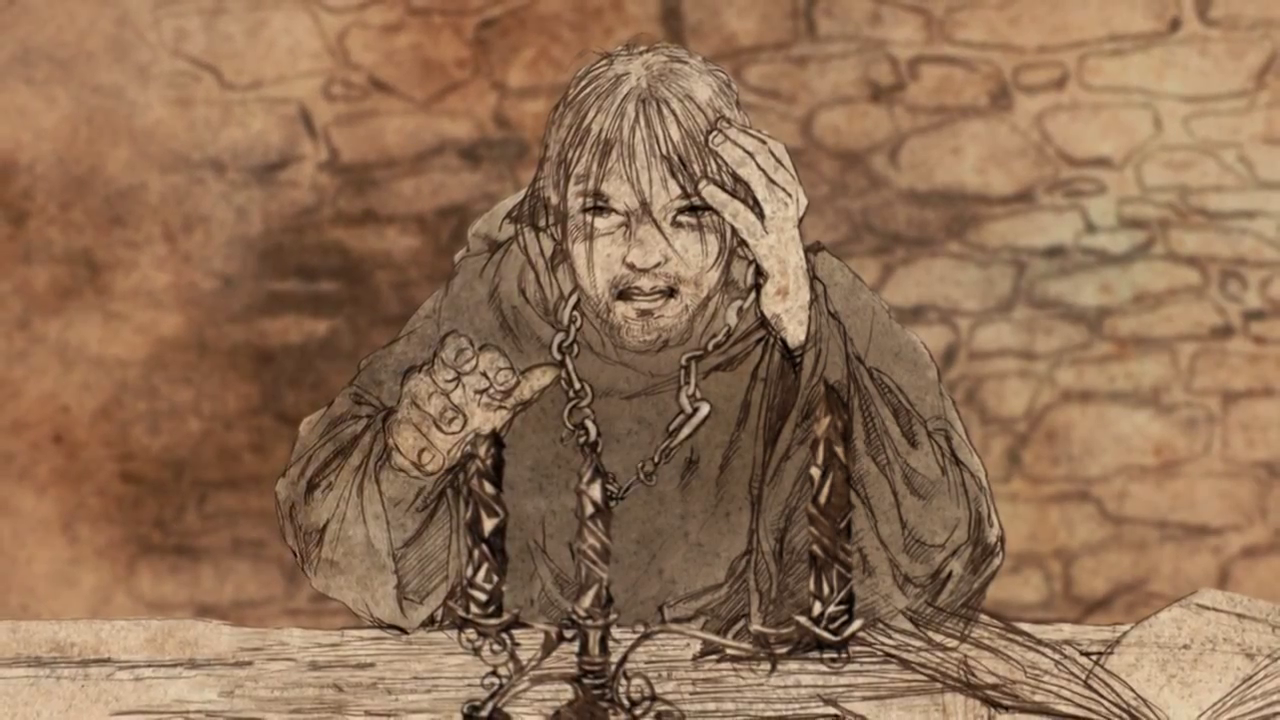
    I know everybody's watched it, but have any of you read the series A Song of Ice and Fire? I'm on Book Four, A Feast for Crows. When I'm not working, I think, I live more in Westeros than I do in America. It's that intriguing, enchanting, absorbing. And the other night, I came across this passage, in the Prologue: 

    "The night before an acolyte says his vows, he must stand a vigil in the vault. No lantern is permitted him, no torch, no lamp, no taper . . . only a candle of obsidian. He must spend the night in darkness, unless he can light that candle. Some will try. The foolish and the stubborn, those who have made a study of these so-called higher mysteries. Often they cut their fingers, for the ridges on the candles are said to be as sharp as razors. Then, with bloody hands, they must wait upon the dawn, brooding on their failure. Wiser men simply go to sleep, or spend their night in prayer, but every year there are always a few who must try."  

    ". . . what's the use of a candle that casts no light?"

    "It is a lesson," Armen said, "the last lesson we must learn before we don our
    maestcr's chains. The glass candle is meant to represent truth and learning,
    rare and beautiful and fragile things. It is made in the shape of a candle to
    remind us that a maester must cast light wherever he serves, and it is sharp to
    remind us that knowledge can be dangerous. Wise men may grow arrogant in their wisdom, but a maester must alwavs remain humble. The glass candle reminds us of that as well. Even after he has said his vow and donned his chain and gone forth to serve, a maester will think back on the darkness of his vigil and remember how nothing that he did could make the candle burn. . . for even with knowledge, some things are not possible."
    That stopped me in my tracks. I read it again. And then once more. And I wished that (or something like it, since we have neither dragons nor dragon glass in 21st-century America) had been our last lesson, perhaps the night before our hooding ceremony, since we don't don chains like the maesters of Westeros.

    How I wish they'd taught us how to simply sit with the dark. 

    I have been a therapist for 33 years, and in that time I have seen many who have grown arrogant--in their knowledge, if not their wisdom. I have seen a few use their knowledge in dangerous ways. And I have seen not a few who think that because they have the terminal degree, they must know everything. I have known psychologists trained in the scientist/practitioner tradition who abandoned all pretense at critical thinking the evening of the day they defended their dissertations. I have known psychologists who thought they had nothing else to learn and shut their minds to new ideas and new data. And I've met very few who didn't hold themselves above the less-educated. The whole profession has come to think of itself as wholly superior to masters-level practitioners, and spends a lot of time dissing them and expending energy defending turf from them that might be put to better use elsewhere. But that is another rant for another day.

    Worse, and there is another rant coming on this one in a future post, psychology has come to believe that they have the power to change people. Therapy has become and "intervention" to be "delivered" as if to a  retail consumer and its success is to be measured in "behavioral outcomes".

    Our clients believe this, too, and will say to us, "What do we do about it?" or, "I am ready to be fixed, now." And when we can't, they ask us, "What is the use of a candle that casts no light?" So we are seduced into trying, only to bloody our fingers once more.

    As the next passage in the Prologue to A Feast for Crows makes plain, the obsidian candle can give off light -- but that's not under our control.
     "I know what I saw. The light was queer and bright, much brighter than any
    beeswax or tallow- candle. It cast strange shadows and the flame never
    flickered, not even when a draft blew through the open door behind me."

    Armen crossed his arms. "Obsidian does not burn."

    "Dragonglass.'' Pate said. "The smallfolk call it dragonglass." Somehow that seemed important.

    "They do," mused Alleras, the Sphinx, "and if there are dragons in the world
    again . . ."

    "Dragons and darker things,'' said Leo.
    The dragonglass candle is in this sense a metaphor for healing, and gives another bit to the lesson Armen describes. Illness, unhappiness, neurosis--whatever you may wish to call it--is contained within us, and so is healing. There are things we may say or do, or not say or do in a session, things that grew out of our learning (not all of which is formal, by the way) that enter into a person in the same way that a maester's antidote enters the body to combat a poison, and we may contribute to a person's healing in that way. But in the same way that the antidote and the poison do battle inside the victim's body, with the body itself as one of the combatants, so, too, is psychological healing an inside job. We have very little power compared to what resides in you.

    And powers far greater than either of us may determine whether that candle burns.
    Enhanced by Zemanta

    Monday, June 17, 2013

    From the In Box

    The most recent edition of Professional Psychology: Research and Practice landed in my In Box this week, and in it was an interesting study on a multifamily group program for vets with PTSD at the Oklahoma City Veterans Affairs Medical Center (VAMC). 

    It has long been known that while good family support helps people recover from PTSD, the PTSD itself can alienate the sufferer from family members, depriving them of support. Bad family relationships actually interfere with treatment. With this in mind, the Oklahoma City VAMC set out to adapt a multi-family group approach to the specific needs of veterans. They call it REACH, for Reaching out to Educate and Assist Caring, Healthy families. 

    They've collected data from about 95% of their participants, over a period of a little over four years, and they believe that it works. But it's the first such study specifically with veterans diagnosed with PTSD, and it's a small study so these results are very preliminary.

    This was a longitudinal study with no control group, meaning there were no vets wait-listed for it or in some other form of treatment (comparison groups of both types would have been ideal). And the data on improvement was reported by the study participants themselves, to the therapists who both provided the treatment and conducted the research. As with any study of this nature, it may appear to work better than it apparently does, for a couple of reasons:
    1. People can get better over time, either because 'time heals all wounds,' or due to other things occurring in their lives during the course of the study. The authors performed a statistical test for this, but still, a control group would have helped to tease out how much improvement is due to the program itself, and how much due just to life going on. And since some study participants were receiving other treatments at the same time, there's no telling exactly what improvements are due exclusively to REACH.
    2. It is well known that when people invest a lot of time and energy in something, there's a psychological bias towards finding it worthwhile. This is true for researchers and participants, and is bound, in this kind of study, to influence the reporting and interpreting of results.
    One thing that makes the results stronger in this case than in some studies to come out of the VA system in recent years is that the researchers didn't "cherry-pick" their participants, which is to say that nearly everybody who wanted in, got in. Cherry-picking is frequently a problem with treatment efficacy studies, as anyone with co-existing conditions, or who is taking medications, is ruled out, and definitions of the diagnoses that get you into the study are very narrowly defined. This results in the study population not looking much like a typical clinical population. For the purposes of this study, persons with active addictions or who were suicidal or homicidal were screened out, but these are criteria that are almost universally applied in clinical practice as well, so does not much affect the applicability of the results. 

    Even better, their definition of "family" was open and welcoming: A veteran could bring her or his adult significant other of nearly any description -- a lover, a spouse, a parent, a sibling, an adult child, or even a friend. 

    Veterans ranged in age from 22 to 85, which would include the Korean War if not World War II, and that both adds to and detracts from the strength of the study. Different "cohorts" (age groups) serving in different wars could have widely varying backgrounds and combat experiences and therefore respond very differently to a treatment. Also, older vets, by definition, have a more chronic form of PTSD. An average age, as in this study, of 55.8 years means that this is something that may not work as well for very young folk just back from Afghanistan or Iraq with their differing upbringings, combat experiences, and acute onset of PTSD as it does for VietNam-era or Persian Gulf veterans.

    Unfortunately, the study population wound up being almost all white (non-Hispanic) straight males, so we don't know, pending further study, whether this program would be equally helpful to people of color, women, LGBTQQI folk -- never mind veterans or family members who fall into all three categories at once! 

    Of course, there's no reason to believe that it wouldn't work for a wider range of folk, since groups in general have been studied for over half a century now and the results are consistent. It works for nearly everybody, for nearly every problem. It's just that with this study, the authors could not claim with any certainty that this particular protocol would work for other than adult, straight, white males of a certain age.

    From the description, REACH appears to be a nicely-structured program, with a generous time allowance for assessment and engagement with the program, and a nice consolidation/follow-up phase to help families maintain and elaborate on their gains. At the same time, it does not appear to be so structured as to be a cook-book-y, overly technical approach. And folks liked it! Some of them reported that the meetings were the high point of their weeks. Participants knew more about PTSD when it ended than they had when it began, and some of their symptoms improved. They learned coping skills, and their relationships improved. 

    The authors note that in a study of this sort, while you can say you're pretty sure the program helps, it's hard to say exactly what components of the program are most -- or least -- effective. That makes it a bit of a crapshoot whether you can replicate the results elsewhere. What if, for example, one of the only four psychologists running the study is just especially talented, and no matter what she did, her people would get better? On the other hand, if the standard curative factors of all effective groups were in operation here, you could do REACH or any other variation of multifamily group and get the same results anywhere. This is why we like to see multi-center studies, or studies replicated elsewhere producing similar results. However, when you are running only 4-6 vets and their families through at a time, and the whole process takes nine months, as this one does, we'd be waiting a minimum of four more years for the next study -- and that's not counting the time to organize and fund a study, write it up, and get it into print! So I think you will see a lot of psychologists running with this one, and soon. 

    Although VA is mandated to provide some form of family education, the REACH program specifically does not appear to be available at our local (Atlanta) VAMC yet. However, the study's authors will make the materials needed to conduct the group available to any psychologist who wishes to lead one. If a half-a-dozen or so of you are interested, I think we could have one up and running by the end of summer. Just let me know!
    Fischer, E. P., Sherman, M. D., Han, X., & Owen, R. R. (2013). Outcomes of
        participation in the REACH multifamily group program for veterans with PTSD and
        their families. Professional Psychology: Research and Practice (44), 127-134.
    Enhanced by Zemanta

    ShareThis